By Paul Chimodo
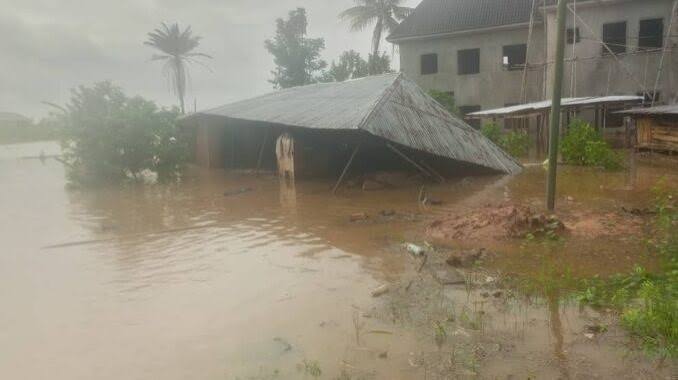
Across Rivers State, the flood is no longer arriving as a single disaster with a beginning and an end. It is becoming a persistent presence, creeping into homes, swallowing roads, invading schools, overwhelming health facilities, destroying farms and forcing families to make painful choices between staying behind with their possessions or leaving before the water rises any further.
From the riverine communities of the Orashi region to the expanding residential settlements of Obio Akpor, from Bukuma and Eleme to Igwuruta, Rukpokwu and Iriebe, the experience is remarkably similar even where the causes are different. Water has entered spaces that were supposed to provide safety, turning houses into islands, roads into waterways and public facilities into places that can no longer perform the functions for which they were built.
In Ogbele, Ahoada East, the crisis has taken on an especially disturbing dimension because the flood has swallowed the community health centre. The Orashi National Congress President General, Emeni Ibe, described the situation as unacceptable, warning that the submergence of the facility has paralysed healthcare delivery and exposed both patients and health workers to danger. For a community already dealing with displacement and damaged livelihoods, losing a health facility means that illness becomes another emergency layered on top of the flood.
Ibe has called for the immediate evacuation of the facility, the establishment of a temporary health post and the deployment of emergency medical support. He has also challenged Aradel Holdings, whose oil and gas operations are linked to the host community, to intervene through its corporate social responsibility and host community obligations. His appeal reflects a growing reality in Rivers State, where communities are increasingly looking beyond government alone for assistance as the scale of the flooding stretches available resources.
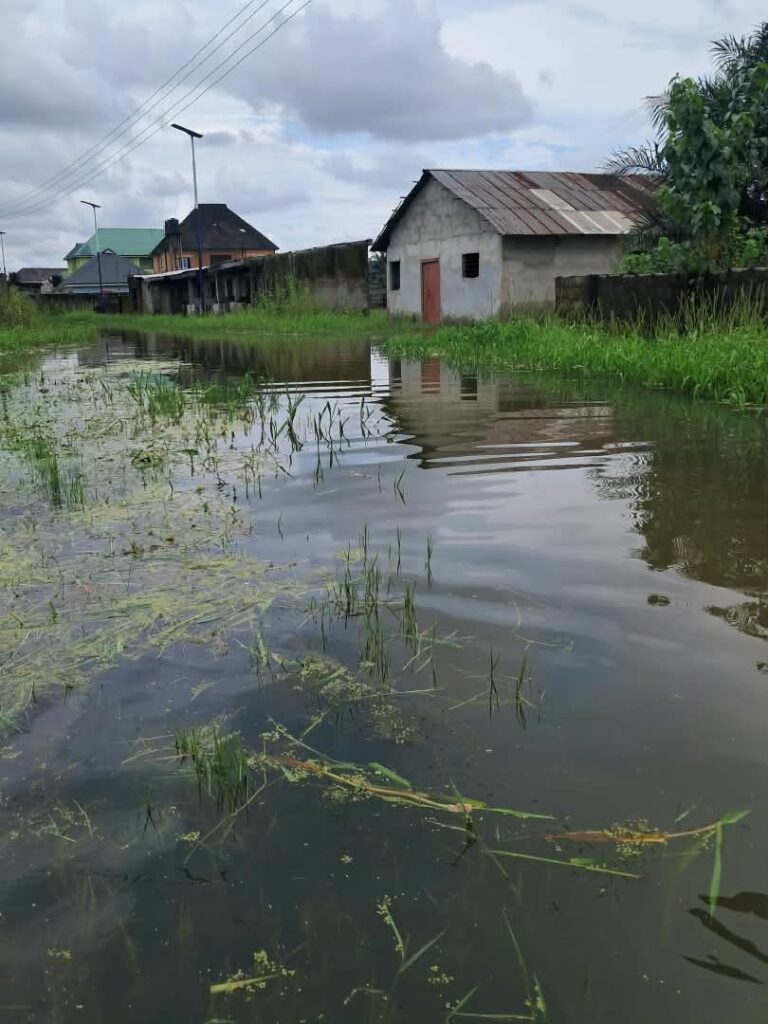
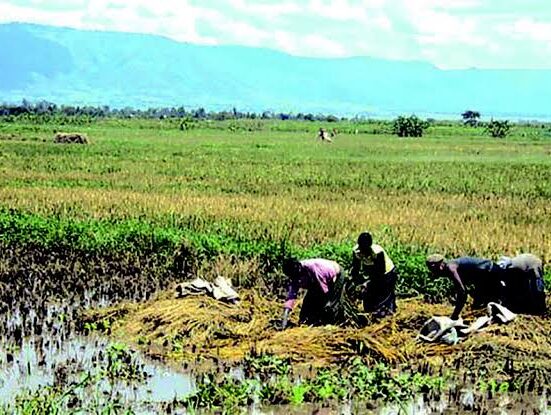
The situation in Ogbele is not isolated. In Bukuma Agum in Degema, families have been pushed from their homes while farmlands have disappeared beneath floodwater. Seedlings have been destroyed, drinking water sources contaminated and economic activity disrupted. Residents have also reported dangerous reptiles entering residential areas, adding another layer of fear to an already unstable environment. Goodnews John, President of the Bukuma Youth Organization, has called for an immediate assessment of the community and assistance from the National Emergency Management Agency, the Degema local government and other disaster response institutions.
For farmers, the flood is particularly devastating because the loss is not limited to what can be seen above the water. A submerged farm represents months of labour, money spent on seedlings and cultivation, anticipated food supplies and household income that may never return. In communities where farming is central to survival, the destruction of agricultural land can continue hurting families long after the water eventually recedes.
In Igwuruta, residents living behind McDonough Schools are confronting another version of the same crisis. Families have been displaced, children have been unable to attend school and properties worth millions of naira have been damaged. Residents say they have spent substantial amounts trying to control the water themselves, only to discover that individual efforts cannot solve a problem that has outgrown the capacity of individual households.
The worsening situation in Rukpokwu tells a similar story. As the water continues to rise, families are being displaced and children are missing school. The crisis is no longer simply about inconvenience caused by heavy rainfall. It is about the gradual disruption of ordinary life and the growing possibility that repeated flooding could permanently alter where people live, work and raise their families.
In urban communities, however, the explanation for flooding is more complicated. Professor Ngozi Nma Odu, Deputy Governor of Rivers State and Chairman of the State Flood Prevention and Management Committee, has distinguished between the flooding caused by rising rivers and the flash flooding experienced in heavily built up areas. In the Orashi region, she explained, communities are dealing largely with river overflow, while other locations face flooding intensified by blocked drainage channels, obstructed waterways, structures built across natural water paths and refuse dumped into drainage systems.
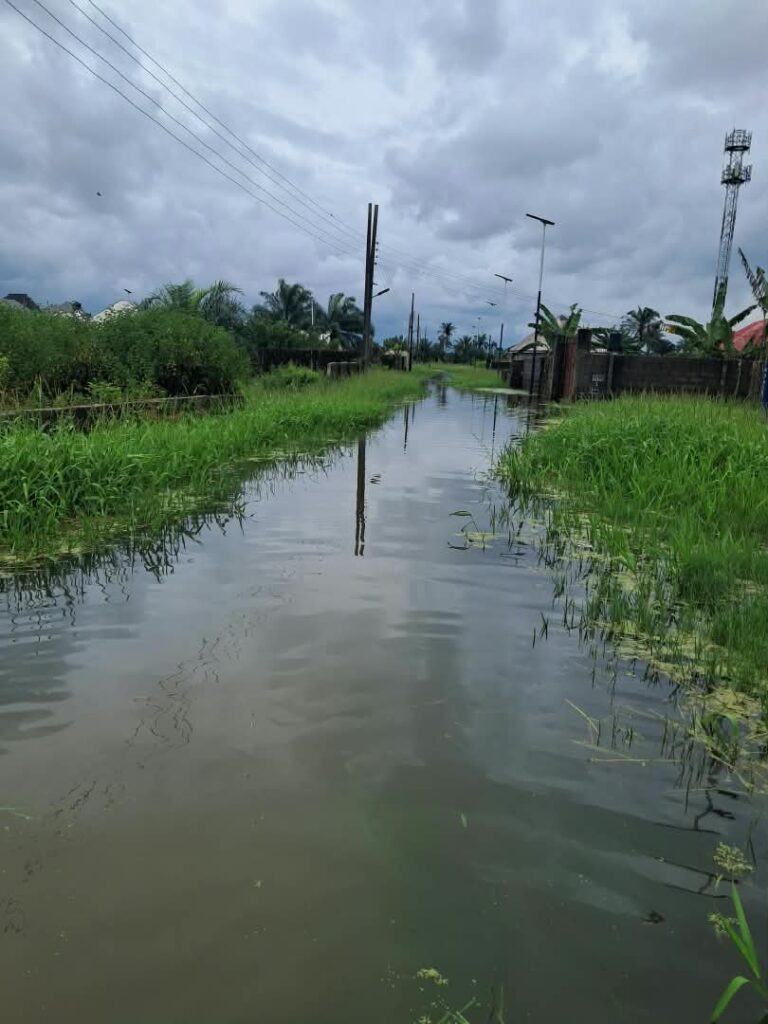
That distinction is important because it exposes the limits of treating every flood as the same problem. A community overwhelmed by a swollen river requires a different response from a neighbourhood where rainfall cannot drain because waterways have been blocked. Both produce the same heartbreaking images of submerged houses, but the solutions cannot be identical.
Civil society groups in Rivers State have therefore questioned whether emergency relief alone can keep pace with the problem. Nasigba Peterside, spokesman for a coalition of concerned civil society organisations, argued that the state response must move beyond announcements and relief after homes have already been submerged. The coalition has called for regular desilting and maintenance of drainage channels and an independent technical assessment of severely affected communities such as Rumuowha and Eneka.
The concern becomes more urgent in Rumuowha, where landlords say the ongoing Ring Road project has contributed to the flooding affecting surrounding estates. Edwin Otabot, speaking on behalf of affected landlords, said the Rumuowha Roundabout previously served as an important access route to several estates, churches and schools but that the drainage arrangement around the construction has changed the movement of water into the area. Residents allege that water from neighbouring communities was channelled towards Rumuowha during the construction and that promised measures to redirect it have not adequately addressed the problem.
The consequences are visible in the estates residents say have been overwhelmed, including Jerusalem Estate, Unity Estate, Gracevilla Estate, Achieve Estate, Glory Estate and Afrik Estate. Families who once considered their houses permanent investments are now struggling to remain in them. Some tenants have moved away, while displaced families face the additional burden of finding accommodation at a time when the flood has already destroyed household property and income.
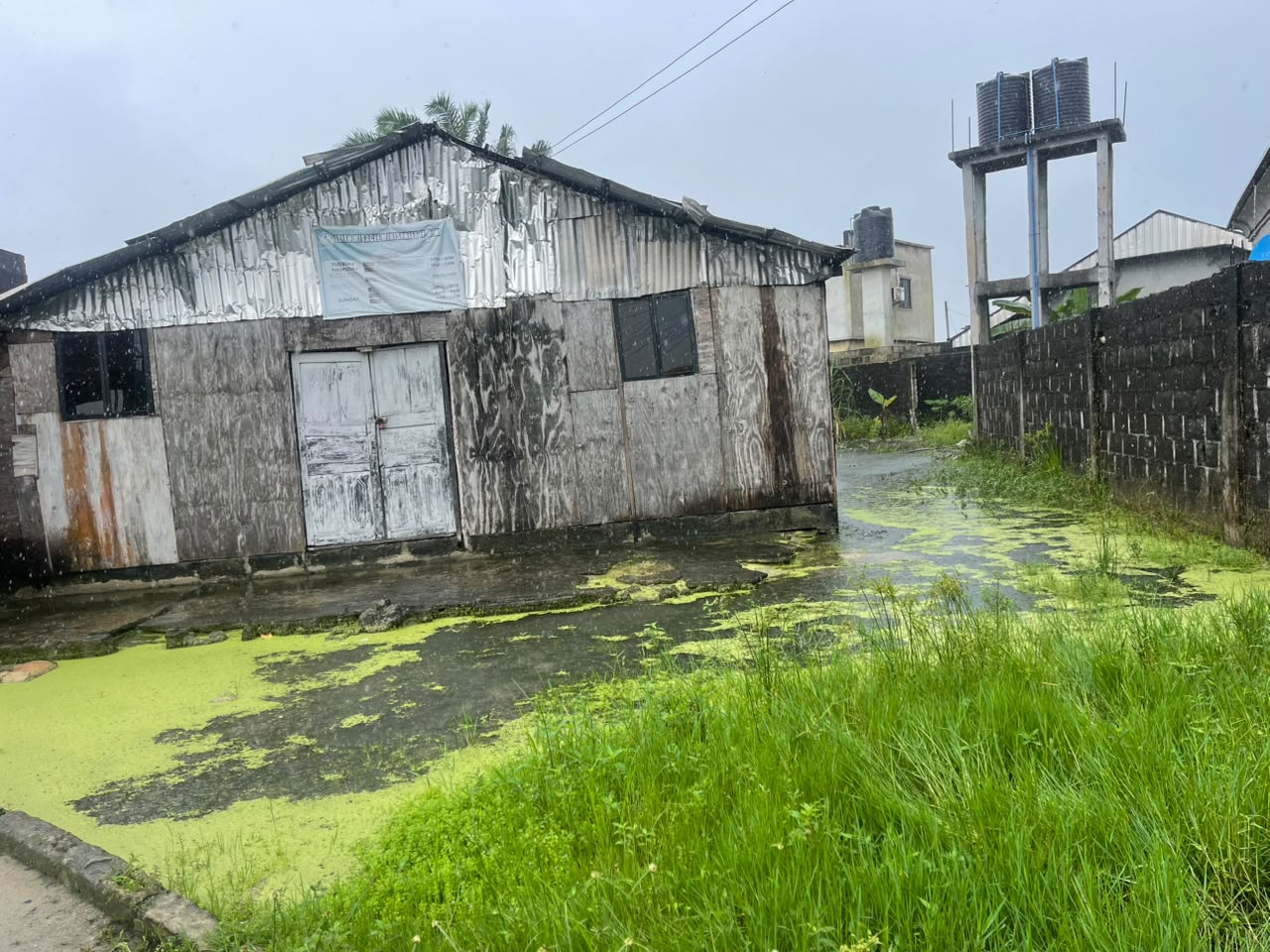
The crisis has also reached places ordinarily associated with refuge. In Eleme, the headquarters of Deeper Life Bible Church was submerged after heavy rainfall, destroying property valued at millions of naira and leaving people living within the church premises without homes. Pastor Francis Okpara, the church’s administrative officer, appealed for urgent government assistance, while Luis Tanee, secretary of the Eleme region, linked the severity of the flooding to inadequate drainage.
The Rivers State Government has responded with relief distribution and technical assessments in some affected areas. In Eleme, experts from the Flood and Erosion Department of the Ministry of Environment were assigned to work with the local government to study the pattern of flooding and determine measures for addressing the problem. Relief materials were also delivered to the area, an intervention welcomed by community leaders including Eze Nwankwo Nnankwo and Bennett Paago.
In Oyigbo, the government has similarly distributed relief materials to affected residents. Yet even the infrastructure intended to provide shelter has revealed the depth of the crisis. The local government established an internally displaced persons camp, but the facility previously used during earlier flooding was itself overtaken by floodwater. The irony is difficult to ignore. A place built to protect people from disaster can become another casualty of the disaster.
Odu has repeatedly stressed that flooding does not recognise political affiliation, noting that the water affects communities and families regardless of who they support. That message has become particularly relevant in communities where the immediate need is not political argument but shelter, food, healthcare, clean water and a safe route out of the flood.
The state has also expanded its response into healthcare. In the Orashi region, where the impact of rising river levels has been severe, the government has announced one year of free health coverage for flood affected residents through the Rivers State Contributory Health Protection Programme. Dr Betty Agala, Executive Secretary of the programme, said affected residents would have access to primary healthcare and referrals. The measure recognises a reality that is often overlooked when flood relief is discussed. Disasters do not only destroy houses and property. They increase exposure to disease, injury and untreated medical conditions.
The Orashi communities have received food and essential relief items as part of the state’s response, with the government prioritising areas including Omoku, Egbema, Osamini and Ibiru. The government has attributed some of the flooding in the region to rising river levels and the overflow of waterways, making the situation different from the drainage related flooding confronting many urban settlements.
But the distance between emergency response and prevention remains one of the central questions hanging over Rivers State. NEMA had already identified thousands of communities across Nigeria as being at high risk of flooding in 2026, while preparedness plans included public awareness, monitoring of vulnerable waterways, temporary shelters, stakeholder engagement and the prepositioning of relief materials. The continuing scenes across Rivers therefore raise a difficult practical question about how effectively warnings, forecasts and preparedness plans are translated into action at community level.
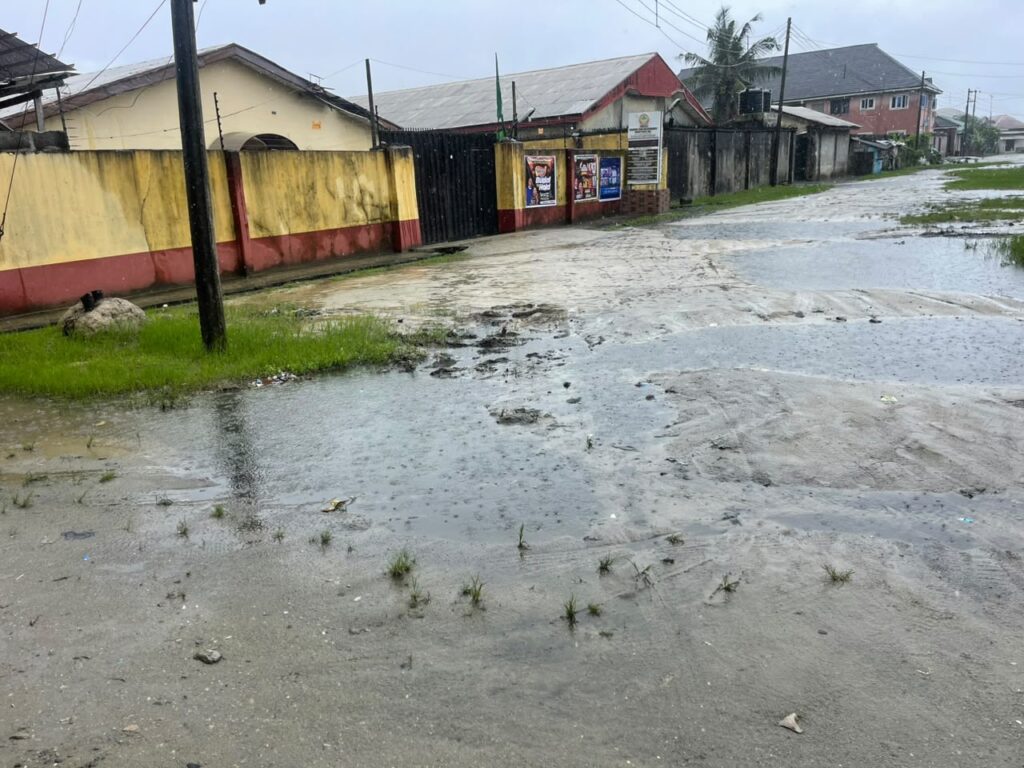
That question is particularly painful in Iriebe, where flooding has become associated with loss of life. A 38 year old man reportedly drowned after falling into floodwater at the Rivers State Government Housing Estate. Residents said he cried for help on a Saturday morning but rescue efforts came too late. Dozens of homes along Roads Three to Fifteen have also been submerged, while residents say similar tragedies have occurred in the area over the years.
The danger extends beyond drowning. Several soakaway pits have reportedly collapsed, allowing human waste to mix with floodwater. Parents are keeping children away from school because of concerns about contaminated water, while residents have called for the evacuation of the worst affected areas and temporary accommodation. Nwibana Barisuka, Chairman of the Government Housing Estate, has urged the Flood Prevention and Management Committee to act before more lives are lost.
For commercial motorcycle operators working around the School to Land axis, the flooded roads have become an economic trap. Their motorcycles are damaged by deep potholes and deteriorated road surfaces, forcing them to spend money repairing the very machines they depend on to earn a living. Every day the road remains impassable therefore carries a financial cost that may not appear in official flood assessments.
The same economic pressure is being felt across communities where businesses have closed, tenants have moved away and farmers have lost entire planting seasons. Flooding is therefore becoming more than an environmental emergency. It is a housing crisis, a public health crisis, a transportation crisis, an education crisis and, increasingly, a livelihood crisis.
Prince Sodin Akiagba, Coordinator of the Sanitation Marshal Volunteers, has called for immediate attention to persistent flooding and deteriorating roads across Port Harcourt and Obio Akpor, particularly around NTA Road and Cornerstone Road in Ozuoba. His concerns connect the environmental problem with sanitation, pointing to clogged gutters and obstructed waterways as factors that worsen flooding, create traffic gridlocks and damage commercial activity.
Yet it would be too simple to place the entire burden on residents and accuse communities of creating their own flooding. Where drainage systems are inadequate, waterways are poorly maintained, development alters natural water paths and major infrastructure projects change drainage patterns, individual responsibility can only go so far. The challenge is to determine precisely where human activity is worsening natural vulnerability and then act on that evidence.
That is why the call for technical assessments matters. The most durable response to Rivers State’s flooding will require more than distributing relief materials after disaster strikes. It will require mapping flood paths, maintaining drainage systems, protecting waterways, enforcing planning regulations, reviewing infrastructure projects where necessary and ensuring that communities vulnerable to river overflow are not treated as though they face the same problem as urban neighbourhoods blocked by drainage failures.
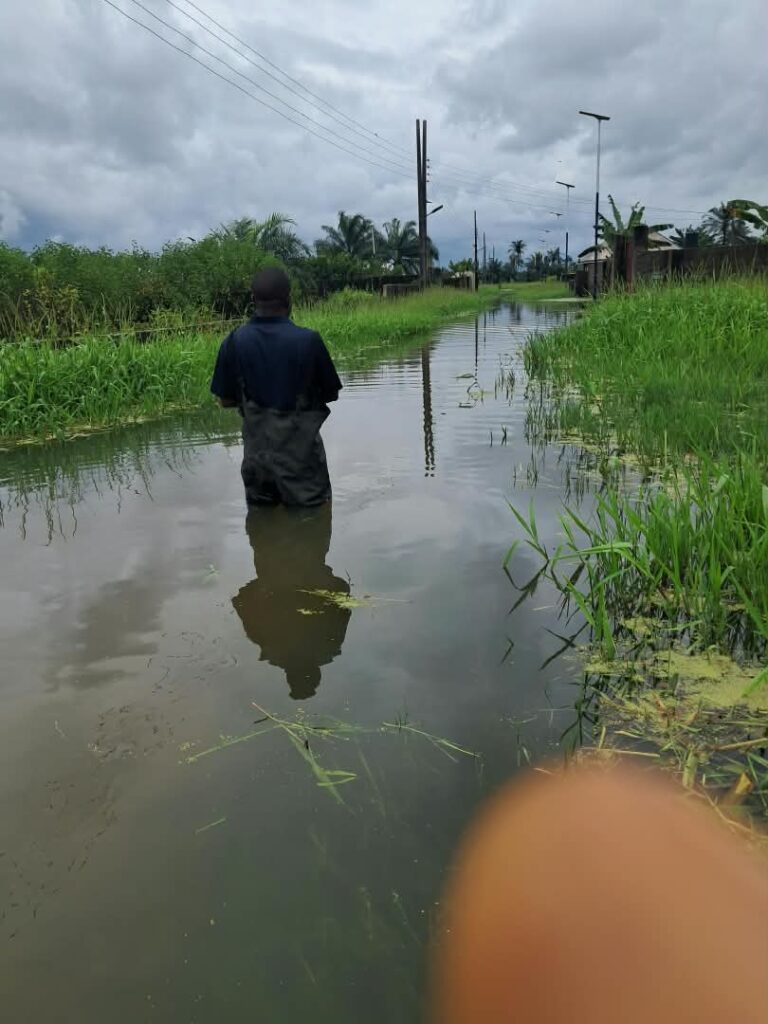
The residents now standing in floodwater do not need another promise that the water will eventually disappear. They need to know whether the next rainfall will bring the same disaster, whether their children will remain safe, whether their farms can be restored, whether their homes can be occupied again and whether the roads connecting them to hospitals, schools and markets will remain open.
The Rivers State Government has begun combining relief with healthcare support and technical intervention, while civil society groups are demanding stronger preventive measures and affected communities continue to document the human cost. The challenge now is to connect those efforts into a system that works before the water reaches the doorstep.
Because in Rivers State, the flood is no longer simply something that happens when the rain comes. It has become a test of the state’s roads, drainage, housing, health system, environmental planning, emergency preparedness and capacity to protect communities that have nowhere else to go.
And for the families watching the water rise around their homes, the real measure of every intervention will remain painfully simple. When the next rain comes, will there finally be somewhere safe for them to stand?