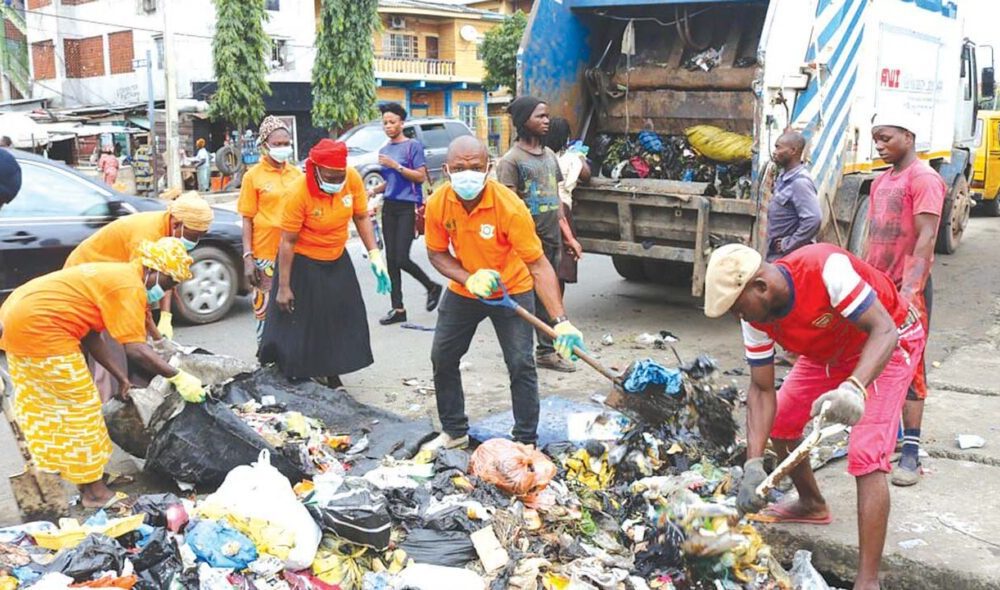
Some residents of Port Harcourt have expressed mixed reactions to the Rivers State Government’s decision to cancel the monthly environmental sanitation exercise, describing the move as both timely and controversial.
Those who spoke to reporters said the restriction of movement usually imposed during the sanitation exercise had, over the years, disrupted economic and social activities, particularly for small business owners and workers who depend on weekend trade.
According to residents, while the sanitation programme was initially designed to promote cleanliness and public hygiene, the monthly restriction of movement often caused unnecessary hardship, especially for people attending events, travelling, or running essential services.
A resident of Rumuola, Mr. Chidi Okafor, commended the government for scrapping the exercise, noting that “the lockdown on the last Saturday of every month was no longer practical in today’s economy.” He said that many people lose valuable business hours, especially in a state like Rivers where weekends are a key period for trade and social gatherings.
Similarly, a trader at Mile One Market, Mrs. Blessing Ogolo, said the cancellation was “a welcome relief” for market women who rely on weekend sales. “We support environmental cleanliness, but it should not come at the cost of people’s livelihoods. The government can find other ways to keep the city clean,” she said.
However, not all residents agreed with the decision. Some expressed concern that without a structured sanitation day, the city could become dirtier due to residents’ poor waste disposal habits.
Mr. Johnson Worlu, a civil servant, argued that while the restriction of movement might have been inconvenient, it encouraged community participation in cleaning neighbourhoods. “What we need is better enforcement and awareness, not outright cancellation. People may stop cleaning their surroundings now,” he warned.
Others suggested that the Rivers State Government should introduce alternative waste management initiatives, such as community clean-up drives, improved refuse collection systems, and stronger enforcement of environmental sanitation laws.
They urged the government to strengthen the Rivers State Waste Management Agency (RIWAMA) to ensure regular evacuation of refuse and public education on hygiene practices.
As the debate continues, residents are calling for a balanced approach — one that promotes a clean environment without disrupting daily economic and social life.
The cancellation of the monthly environmental sanitation marks a significant policy shift in Rivers State, ending a decades-long tradition that had shaped public life in Port Harcourt and its environs.