By Paul Chimodo
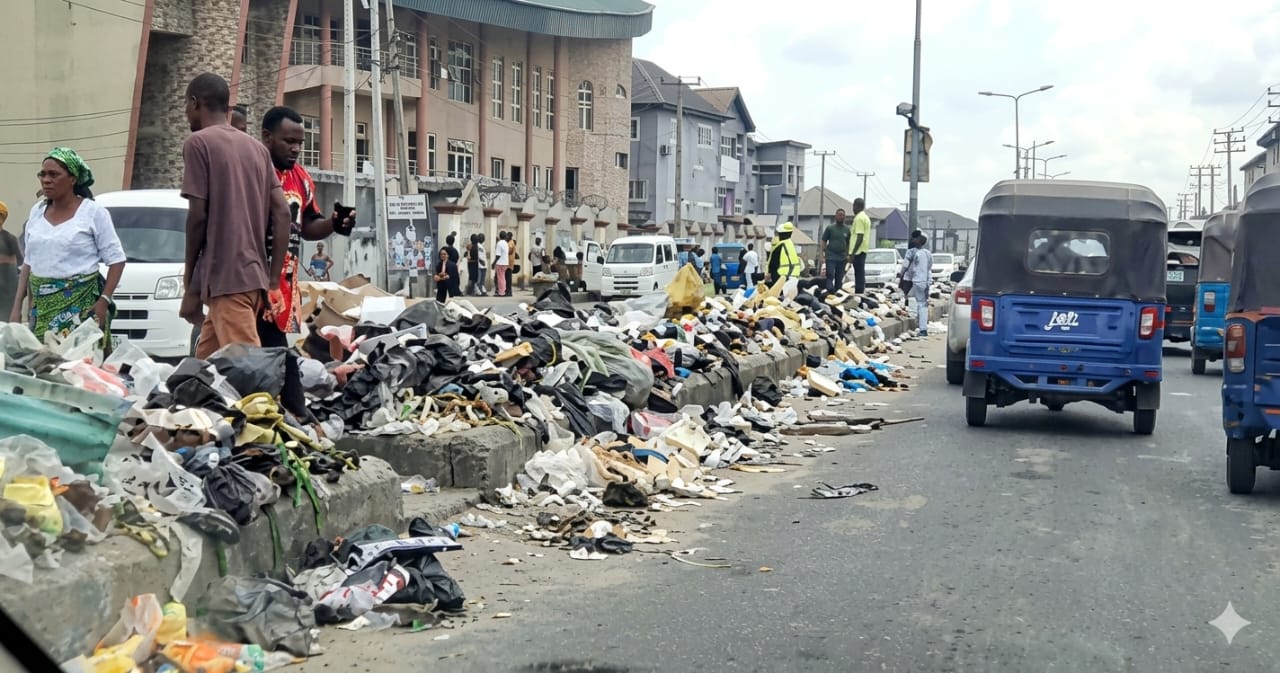
Port Harcourt, once celebrated as the Garden City of the Niger Delta, stands today as a stark reminder of what happens when rapid urban growth, environmental neglect and administrative breakdown collide. With towering trash across major roads, unregulated dumping grounds, and persistent air pollution darkening the skyline, this oil rich metropolis confronts a deepening sanitation crisis that poses severe health and environmental threats. What was once a city admired for its lush greenery and orderly public spaces has, in recent years, lost its shine and become a symbol of urban decay and environmental crisis.
At the heart of Port Harcourt’s problems lie expanding waste management failures and accountability challenges that have stalled efforts to restore the city’s former beauty. Despite numerous government interventions and public private collaborations designed to strengthen refuse collection and disposal, streets remain littered, drains are clogged, and informal dumping continues unchecked. This feature investigates the root causes of the city’s deterioration, voices from policy makers and environmental advocates, and the lived reality of residents who witness daily the decline of one of West Africa’s once pristine urban centers.
Refuse piles have become an ordinary sight. “Every morning my children and I walk through this mess just to go to school and market. It is embarrassing and dangerous. We have reported it many times, but the trash keeps returning faster than it is cleared,” said Emmanuel Okoro, a father of three who has lived in Port Harcourt for over 20 years. Nearby, Ruth Nwaneri, a petty trader, added, “When it rains, the water mixes with this garbage and the smell becomes unbearable. Customers avoid coming close because they think the market is dirty. How do we survive like this?”
The inconsistent waste collection by contractors engaged by the Rivers State Waste Management Agency has worsened the problem. Chinedu Eze, chairman of a prominent residents association, said, “We have waste contractors assigned to our area, but sometimes they do not show up for days. We have paid community dues to help with cleaning, but without regular collection, our efforts feel futile.”
When asked about the growing refuse problem, a senior official at the agency acknowledged the scale of the challenge but stressed ongoing efforts to address it. “We are aware of the public frustration with garbage accumulation. We have expanded partnerships and are improving monitoring to ensure that contractors fulfill their responsibilities to clear refuse in a timely and regular manner,” the official said. He noted that the agency has reviewed contracts and penalized some waste handlers for poor performance, while onboarding additional teams to cover high density areas.
Environmental advocates warned of the health risks posed by the city’s worsening sanitation. Fyneface Dumnamene, an environment expert, said, “The current state of sanitation is deeply concerning. Trash littered everywhere can trigger outbreaks of disease. These heaps release odors and attract pests that spread illness.” Sodin Akugba, a climate and environmental specialist, added, “Without strict enforcement of environmental regulations and community education, the city will continue to face worsening conditions.”
Residents report that refuse often lies near homes, markets, and schools, creating environments ripe for malaria carrying mosquitoes, water related illnesses, and respiratory infections. Dr. Grace Ejem, a public health specialist, warned that “when waste sits for long periods, contaminated water can seep into the ground and find its way into drains and wells. This increases the risk of cholera, typhoid, and other waterborne diseases.”
Beyond piles of trash, persistent air pollution adds another layer of environmental burden. Fyneface Dumnamene observed, “Air quality and waste management are linked. When people burn waste because it is not collected, it worsens pollution. We must address these issues together.”

Residents previously protested when soot became so pervasive that rainwater and household surfaces turned black and reports surfaced that potable water sources were contaminated by soot particles. Chief Samuel Briggs, a retired civil servant, recalled, “This city was beautiful. We would drive through and admire the palms and flowers. People said this was the jewel of the east. We never imagined it could deteriorate like this.”
Youth leaders also shared their frustration. Samuel Okafor explained, “We organize cleanup days and many people participate, but without structural support and regular waste removal, it feels like we are fighting an endless battle.”
Despite the grim conditions, there are signs that some momentum is building for change. Ms. Ifunanya Chukwu, a recycler, said, “We turn plastic into products we sell. It gives us income and reduces waste. More people should get involved.” Authorities have also invested in additional garbage trucks and sanitation equipment while conducting public campaigns to encourage proper disposal practices.
Port Harcourt is no longer just a city facing environmental difficulties. It has become a case study of urban decline under the weight of mismanagement, neglect, and lost opportunities. Bold and consistent action is required to restore the Garden City’s legacy. For the health and dignity of its residents, and for Nigeria’s reputation internationally, Port Harcourt’s transformation from a city of waste back to a city of beauty cannot remain a distant dream.