By Paul Chimodo
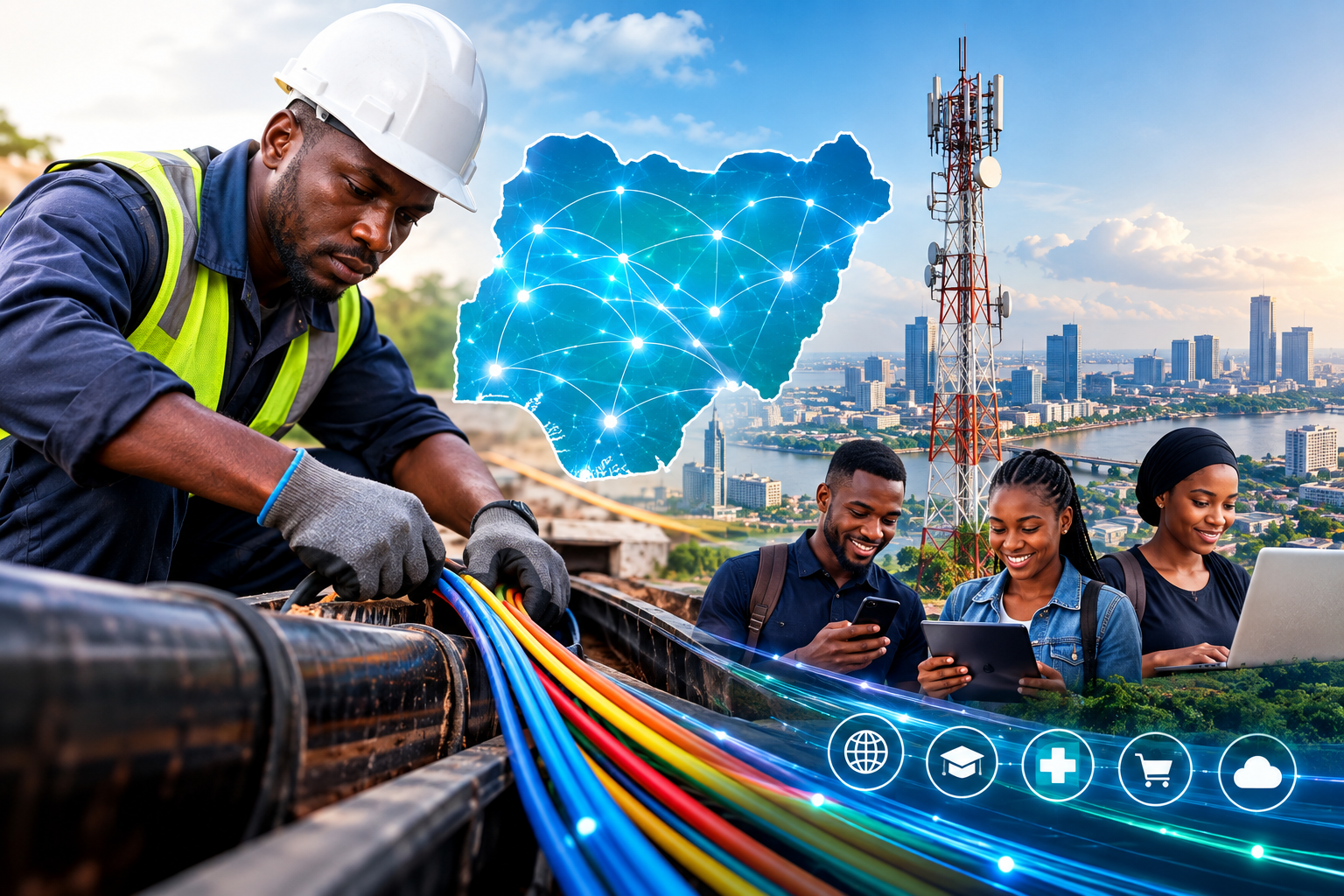
Nigeria is preparing to undertake one of its most ambitious digital infrastructure projects: the deployment of 90,000 kilometres of fibre-optic infrastructure across the country under Project BRIDGE. The initiative is designed to strengthen the nation’s digital backbone, extend broadband connectivity and create the infrastructure needed for a more connected digital economy. But as the project moves from policy ambition towards implementation, a familiar challenge is coming into focus — the gap between having the right policies and successfully executing them.
Project BRIDGE, which stands for Building Resilient Digital Infrastructure for Growth, is structured as a public-private partnership. The Federal Ministry of Communications, Innovation and Digital Economy says the project will deploy at least 90,000 kilometres of fibre across Nigeria’s 36 states and the Federal Capital Territory, connecting more than 770 local government areas. The government estimates the project will cost about two billion dollars.
The scale is significant because fibre infrastructure is increasingly becoming the foundation on which modern economies operate. Reliable internet connectivity supports digital payments, online education, healthcare technology, e-commerce, cloud services, remote work, entertainment and the growing number of businesses that depend on digital platforms.
For Nigeria, expanding that infrastructure is also about reducing the digital divide. The Federal Ministry says more than 33 million Nigerians remain offline and identifies schools, healthcare facilities and other social institutions among those that could benefit from improved connectivity. The project is therefore being positioned not simply as a telecommunications investment, but as infrastructure for economic and social development.
Yet putting thousands of kilometres of fibre into the ground is only one part of the challenge.
The bigger question is whether Nigeria can create an environment in which the infrastructure can be deployed efficiently, protected after installation and used effectively by operators and consumers.
Stakeholders at the Policy Implementation Assisted Forum in Lagos have raised concerns about poor coordination, fragmented implementation and persistent infrastructure challenges. They identified issues including right-of-way constraints, repeated road excavation, fibre cuts and weak coordination among federal, state and local authorities as obstacles that could slow the country’s fibre expansion.
This is where the proposed Dig-Once policy becomes important.
The basic idea is straightforward: when roads are being constructed or rehabilitated, infrastructure such as ducts for fibre cables can be installed at the same time. Instead of different telecommunications companies repeatedly digging up roads to install their own cables, shared infrastructure can provide a coordinated route for future deployment.
It sounds simple, but its importance becomes clearer when considered against the cost and disruption associated with repeated excavation. Every time a road is opened for telecommunications infrastructure, there are potential consequences for traffic, businesses, public infrastructure and the cost of deployment.
A coordinated approach could reduce duplication and make future fibre expansion easier. Stakeholders have consequently argued that the success of Project BRIDGE should be considered alongside the implementation of Dig-Once and other reforms intended to improve the telecommunications environment.
The issue illustrates one of Nigeria’s longstanding development challenges: policies can be announced, but their impact ultimately depends on implementation.
Project BRIDGE itself has attracted substantial institutional and financial backing. The Federal Government says it has secured 500 million dollars from the World Bank, 200 million dollars from the African Development Bank and 100 million dollars from the European Bank for Reconstruction and Development. Together, the announced financing amounts to 800 million dollars, with additional private-sector financing expected as the public-private partnership takes shape.
The proposed structure gives the private sector between 51 and 75 percent of the project vehicle, while the government would hold between 25 and 49 percent. The government says the special purpose vehicle will operate as an independent company, with private investors expected to provide the remaining financing required for the project.
That structure places considerable importance on investor confidence.
Investors need more than a large potential market. They need predictable regulations, effective coordination among government agencies, protection of infrastructure, clarity around rights of way and confidence that the commercial environment will support long-term investment.
This is particularly important because fibre infrastructure is capital-intensive. The cables and associated infrastructure have to be deployed, maintained and protected over many years. Damage to fibre can interrupt telecommunications services and create additional repair costs.
The challenge of protecting telecommunications infrastructure is therefore inseparable from the challenge of expanding it.
A successful fibre network would also need to reach beyond major cities. Nigeria already has significant differences in connectivity between urban and rural areas. The World Bank has noted that private internet service providers are more active in urban areas because the commercial incentives for investment are stronger there, while rural areas often require catalytic public investment to make large-scale broadband infrastructure commercially viable.
That makes Project BRIDGE potentially important for areas that might otherwise struggle to attract sufficient private infrastructure investment.
The real measure of success, however, will not simply be the number of kilometres of cable installed.
For an ordinary Nigerian, the value of the project will be experienced through better internet access, more reliable digital services and greater opportunities to participate in the digital economy.
A connected school should be able to access online educational resources. A healthcare facility should be able to use digital systems more effectively. A small business should be able to reach customers beyond its immediate location. A young person in a smaller community should be able to learn digital skills, work online or build a technology-enabled business without having to relocate to Lagos or Abuja.
Those outcomes require more than fibre.
They require affordable internet services, suitable devices, electricity, digital skills, relevant online services and policies that encourage businesses and institutions to make productive use of connectivity.
This is why the policy environment surrounding Project BRIDGE matters almost as much as the infrastructure itself.
If different levels of government continue to operate without sufficient coordination, fibre deployment could face delays. If roads are repeatedly excavated without proper planning, infrastructure costs could rise. If installed cables are frequently damaged, network reliability could suffer. And if connectivity reaches communities without affordable access or the skills to use it productively, part of the potential economic benefit could remain unrealised.
There is also the question of accountability.A project of this size will require clear milestones, transparent procurement and effective monitoring. The government has already outlined a financing and partnership structure and invited private-sector investors to participate. It says the private-sector funding is intended to be secured and financial close achieved by the third quarter of 2026.
As implementation progresses, Nigerians will need to be able to see how much infrastructure has been deployed, where it has been deployed, what communities have gained access and how effectively the network is being maintained.
Project BRIDGE arrives at a moment when Nigeria’s economy is becoming increasingly dependent on digital infrastructure. Banking, commerce, media, education, entertainment and government services are all moving further into digital spaces.
That makes reliable connectivity less of a luxury and more of an economic necessity.
The project also represents an opportunity to address a structural weakness in Nigeria’s digital economy: connectivity that is available in some locations but remains inadequate, expensive or unreliable in others.
But the country’s experience with infrastructure development suggests that ambition must be matched with execution.
Nigeria already has policies designed to improve broadband access and digital inclusion. The question now is whether institutions can work together closely enough to turn those policies into functioning infrastructure on the ground.
Project BRIDGE therefore represents two things at the same time: a major investment in Nigeria’s digital future and a test of the country’s ability to close the gap between policy formulation and implementation.
The fibre cables may eventually run across thousands of kilometres of Nigerian territory. But the project’s ultimate success will be measured by what happens above those cables — whether businesses grow, schools connect, healthcare improves, digital services expand and more Nigerians are able to participate meaningfully in the digital economy.
The infrastructure is the bridge. The real destination is a more connected Nigeria.