By Paul Chimodo
Across Nigeria, millions of children are growing up in conditions shaped by poverty, insecurity, poor education, and economic hardship. While political leaders continue to speak of the future, many Nigerian children are struggling to survive the present.
That question is no longer asked only in classrooms, policy meetings, or newspaper editorials. It is now being whispered in homes where parents skip meals so their children can eat, in overcrowded classrooms where one teacher struggles to manage more than seventy pupils, and in hospitals where malnourished children fight silent battles against hunger.
According to UNICEF, two out of every three Nigerian children live in multidimensional poverty, lacking access to healthcare, education, nutrition, clean water, and protection. UNICEF also estimates that Nigeria has one of the highest numbers of out-of-school children in the world, with more than 10 million children currently outside the classroom.
For many families, education has become a luxury they can no longer afford.
In a small community outside Lagos, 42-year-old trader Grace Adewale says she withdrew two of her children from private school after her food business collapsed under rising inflation.
“Every day prices increase. Transport increases. School fees increase. But our income is still the same,” she says quietly. “Sometimes you have to choose between feeding children and paying school fees.”
Her story mirrors the reality facing millions of Nigerian parents battling rising living costs. Food inflation, unstable electricity, unemployment, and low wages have pushed many households into survival mode. Children are often the first victims of these economic pressures.
In northern Nigeria, insecurity has worsened the crisis. Armed attacks, displacement, and kidnappings have disrupted education and deepened fear among families. In March 2024, gunmen abducted more than 200 pupils from a school in Kuriga, Kaduna State, one of the largest school kidnappings in recent years.
The trauma from such incidents continues to shape how many parents think about education.
“When parents are afraid to send children to school, society is already in danger,” says education consultant and former minister Obiageli Ezekwesili, who has repeatedly advocated for stronger investment in education and child welfare.
Although some abducted children were later released, the psychological damage remains. In parts of northern Nigeria, schools still operate under fear. Teachers worry about safety. Parents worry about whether their children will return home alive.
Security threats are no longer limited to conflict zones alone. In Ibadan, Oyo State, concerns over child safety have also grown following reports of kidnappings and attacks involving children in recent years. Such incidents continue to heighten anxiety among families already dealing with economic hardship.
For child rights advocates, these incidents reveal a deeper problem.
“Nigeria reacts after tragedies instead of preventing them,” says child development advocate Aisha Gaidam “Children should never become statistics before leaders pay attention.”

According to UNICEF, Nigeria has one of the highest numbers of malnourished children globally, with about 32 percent of children under five suffering stunted growth due to malnutrition. Millions of Nigerian children are affected by severe acute malnutrition.
Teachers say hungry children often struggle to concentrate in class.
Primary school teacher Chinedu Okafor says some pupils dont concentrate during morning lessons because they arrive in school without eating.
“You can see it in their faces,” he says. “Some children are brilliant, but hunger is affecting them physically and mentally.”
Nutrition experts warn that malnutrition affects not only physical growth but also cognitive development, learning ability, and future productivity.
“When a child grows up malnourished, the effects can last a lifetime,” says nutrition advocate Dr. Amina Yusuf. “The country eventually pays the price through poor health, reduced productivity, and increased poverty.”
Yet many parents say they are doing their best under impossible conditions.
In Kano, commercial driver Ibrahim Musa says he works nearly fourteen hours daily but still struggles to provide basic necessities for his five children.
“School materials are expensive. Food is expensive. Rent is expensive,” he says. “Parents are tired. We want our children to succeed, but surviving each day is already difficult.”
The emotional burden on children is also growing.
Mental health counsellors say more children are experiencing anxiety linked to insecurity, poverty, unstable homes, and uncertainty about the future. Many children witness domestic stress caused by unemployment and financial hardship.
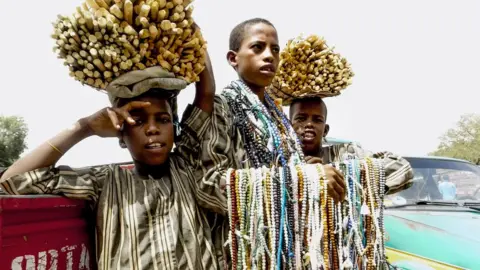
In some communities, young boys abandon school to support their families through street hawking, while young girls are pushed into early marriages due to economic pressure.
According to child welfare reports, millions of Nigerian children continue to face child labour, violence, and limited access to opportunities needed for healthy development.
Education stakeholders argue that Nigeria’s biggest failure may not simply be poverty, but misplaced priorities.
Despite repeated promises by governments over the years, education funding remains low compared to international recommendations. Many public schools still lack proper classrooms, toilets, learning materials, and qualified teachers.
Education advocate Otto Orondaam has repeatedly stressed the importance of investing in vulnerable children and improving access to education for disadvantaged communities.
“Every child deserves access to quality education regardless of background,” he said during public conversations on child education and development.
Community mentors working directly with children also fear the long-term consequences if the current situation continues.
“If children lose hope early, society loses its future,” says youth mentor Samuel Ekanem, who works with teenagers in Port Harcourt. “A country cannot grow when millions of its children feel abandoned.

Still, despite the grim realities, many Nigerians continue to fight for children every day. Teachers in overcrowded schools continue to show up. Parents continue to sacrifice. Non-governmental organizations continue to provide scholarships, meals, and safe spaces for vulnerable children.
In Makoko, Lagos, volunteer groups teach children in difficult conditions. In Maiduguri, humanitarian workers support displaced children affected by insurgency. In several states, local mentors organize free tutorials for children whose parents cannot afford extra lessons.
These efforts reveal something important: Nigerians have not completely given up on their children, even if many believe the system has.
The bigger concern is whether the country itself is doing enough.
When millions of children cannot access quality education, when insecurity forces schools to shut down, when hunger affects learning, and when parents work endlessly without being able to provide basic needs, the question becomes unavoidable.
Has Nigeria failed its children?
Perhaps the answer is not entirely yes. But for millions of Nigerian children growing up surrounded by hardship, neglect, and uncertainty, the country has certainly fallen short of the promise it owes them.
And unless urgent action is taken through stronger policies, improved education, economic support for families, child protection systems, and real investment in young people, the next generation may inherit not just poverty, but hopelessness itself.